


Whats HOT



Latest Posts
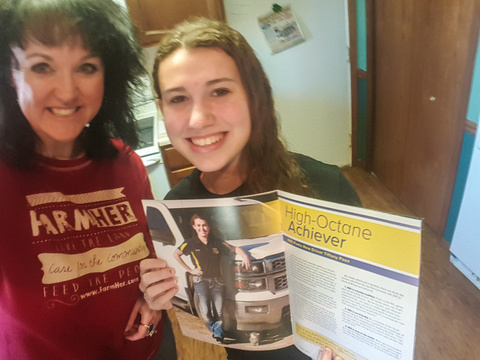
High-Octane Achiever: Ethanol Fuels New Driver Tiffany Poen
Most of us can vividly remember getting our driver’s license and our first car—our first taste of independence and grown-up responsibility. Fuzzier, however, is our first solo trip to fill up at the pump and the likely confusing choice we made purchasing gas. Not for Tiffany Poen, a new driver (and my awesome neighbor!) who is deliberate with her fuel choice.
Ethanol fuels her new adventure and, just like the truck she inherited from her grandfather, the choice was a matter of passing down a family tradition.
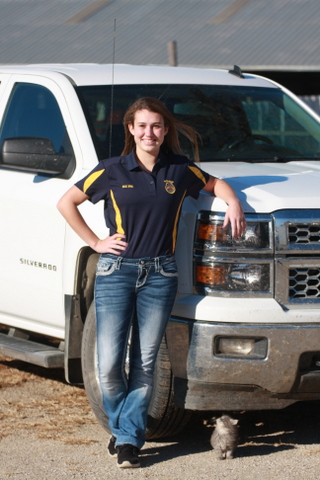
Tiffany Poen from Lake City, Iowa, is a proud South Central Calhoun FFA member and ethanol supporter.
“I really looked forward to getting my license and inheriting my grandpa Bob’s truck,” said Poen, 17, a high school junior from Lake City, Iowa. “This truck is special because my grandma Betty used to ride in it before she passed away in 2013 from complications of cancer.”
Family is important to Poen, who credits her grandfather, mom, and dad for teaching her to drive on the gravel roads near her family’s farm. After completing a driver’s education course, Poen was excited to receive her official driver’s license, which has opened up a new world of possibilities.
“I can go where I want,” said Poen, a high school basketball cheerleader and dancer who drives to practices at the local dance studio and joins friends at the community-owned movie theater where she volunteers.
No matter where she’s headed, there are three big reasons why Poen fills her flex-fuel truck with E85 (a blend of 85 percent ethanol):
1. E85 is a family tradition. Poen is the fifth generation of her family to farm. Her family raises corn that’s converted into ethanol. “My family only uses ethanol,” explained Poen, who plans to study agricultural business at Iowa State University and wants to pursue an ag sales career. “We’re proud that it’s a homegrown fuel that supports America’s farmers.”
2. E85 is eco-friendly. As a member of the South Central Calhoun FFA, Poen is growing her knowledge of agriculture while expanding her leadership skills. “Farming is focused on preserving our natural resources. I like how E85 is a clean energy source that helps protect the environment.”
3. E85 is easy on the wallet. When you’re a student, you have to make your money count. Poen appreciates how E85 and other ethanol blends are budget-friendly. “I want to make the best choices, and that includes E85.”
It was so much fun to interview Tiffany for this article, which appeared in the Winter 2017 issue of American Ethanol magazine, which is distributed nationwide. As you can see, even one of the Poen’s kittens got in on the act!
P.S. Thanks for joining me. I’m glad you’re here.
@Copyright 2017 Darcy Maulsby & Co.

Celebrating New Year’s Eve in Style at a Classic Iowa Ballroom
There was a time when THE hottest place to be for New Year’s Eve was at one of Iowa’s ballrooms, which could be found across the state in cities, small towns and even in the country. While most of these iconic places are gone, Lake Robbins south of Woodward carries on a proud Dallas County tradition since 1931.
Here’s a glimpse of what makes Lake Robbins such a remarkable piece of Iowa history (photos courtesy Lake Robbins Ballroom):
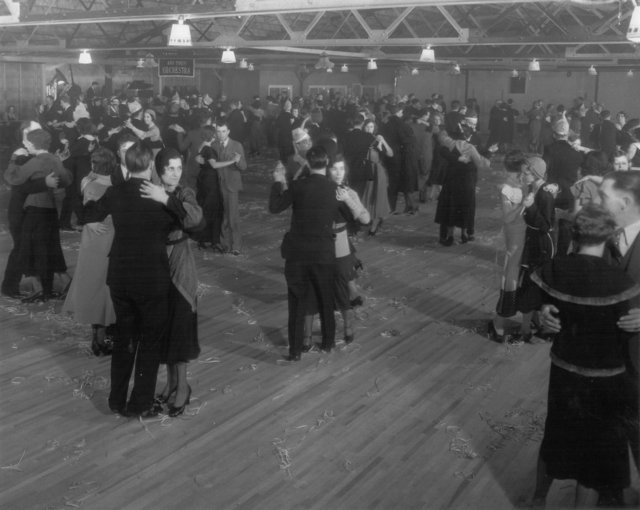
Ringing in the New Year. The legendary Lake Robbins Ballroom opened Nov. 11, 1931, and soon became one of the hottest entertainment venues in Dallas County. With its 10,000-square-foot white oak dance floor (which is still in place), spacious interior and music from popular dance bands of the day, the ballroom became a destination. The photo at the top of this blog post which shows people dancing was likely taken on New Year’s Eve, circa 1933. Notice what appears to be confetti on the dance floor.
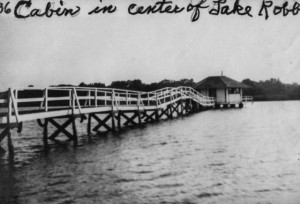
The beginnings of Lake Robbins. Located southwest of Woodward, Lake Robbins started as a natural pond. In the 1920s, Riley Robbins and his son, Mervin, built a man-made lake dredged out by teams of horses. Robbins built an eight-sided cabin with a boardwalk to the edge of the area that would become the famous Lake Robbins Ballroom. A drought in 1936 decimated the lake, which was not rebuilt.
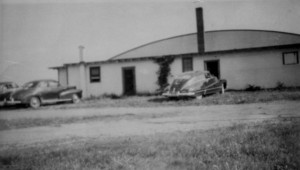
One of Iowa’s last ballrooms. Lake Robbins has always been in the country, and there’s only one way to get there—an unpaved country road. While the ballroom has always had a simple exterior, the magic occurs inside. Through the years, countless married couples first met at Lake Robbins. While many Iowa towns used to have ballrooms, Lake Robbins is one of the few that remains.
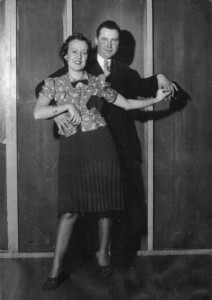
Soon-to-be-married dance champions. While they were not yet married when this photo was taken in 1938, Jacob Cushing of Adel and his future bride, Florence, won a dance contest at Lake Robbins Ballroom. The event was sponsored by Chaplin Gas & Oil. This photo was taken by Edmondson Studio in Perry.
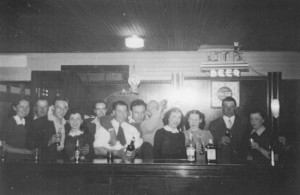
Celebrating the good times. Young people from Dallas County and beyond flocked to Lake Robbins Ballroom, which was one of the few places in the country that had electricity in the early 1930s. Some say future president Ronald “Dutch” Reagan patronized the ballroom when he was a broadcaster at WHO Radio in Des Moines. Lake Robbins was inducted into the Iowa Rock & Roll Music Association in 2007.
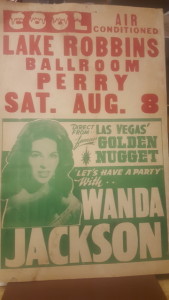 Let’s have a party! While some Lake Robbins performers slipped into obscurity, others became stars. Herbie Kay’s orchestra from Chicago that played opening night in 1931 featured 17-year-old vocalist Dorothy Lamour. In 1936, Lamour moved to Hollywood and made a series of successful comedies starring Bing Crosby and Bob Hope. Another Lake Robbins singer, Perry Como, had huge hits in the 1950s with “Magic Moments” and “Catch a Falling Star.”
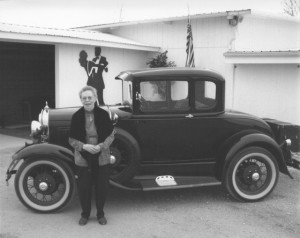
Kip Shannon’s 80+-year career. While she didn’t work on the opening night (Nov. 11, 1931), 23-year-old Coloma “Kip” Shannon stopped by the new Lake Robbins Balloom with her family. She got a job selling tickets there soon after and also handled practically every job at the ballroom during her career, which spanned nearly 80 years at Lake Robbins. Kip died at age 105 in 2014.
Today, owner Lyn Wilkinson carries on the Lake Robbins Ballroom Iowa legacy, caring for the beloved ballroom that she has owned since 1993. Stop by this remarkable venue for an evening of music, dancing and an unforgettable piece of Iowa history.
Want more Iowa culture and history? Lake Robbins Ballroom will be featured in my upcoming book, Dallas County, a pictorial history from Arcadia Publishing, which will be released in the summer of 2017. In the meantime, check out my top-selling “Calhoun County” book, which showcases the history of small-town and rural Iowa, as well as my “Culinary History of Iowa” book from The History Press. Order your signed copy today!
P.S. Thanks for joining me. I’m glad you’re here.
@Copyright 2017 Darcy Maulsby & Co.
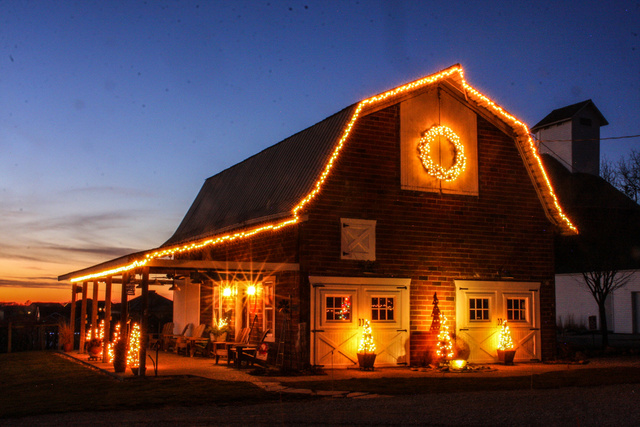
Adel Barn Accents Penoach Winery in Iowa
It started as a dairy barn in the 1920s on a farm north of Adel. By the mid-1990s, the farm was gone but the barn remained part of an acreage surrounded by new housing developments. In 2006, the barn became the hub of Penoach Winery and remains a big draw at this central Iowa destination.
“I like the fact that the barn is rustic and has lasted all these years,” said Joanie Olson, who runs Penoach Winery with her husband, Stan. “Our customers also love the old barn.”
The clay-tile barn was built on the H.B. Kinnick farm north of Adel to house dairy cattle. It was likely constructed with clay-tile blocks made in Adel. Olson recently met an 89-year-old gentleman from Arizona who is related to the Kinnick family and grew up on the farm.
“His father lost the farm during the Great Depression of the 1930s,” Olson said. “This man recalled sitting on the back porch and crying during the farm auction.”
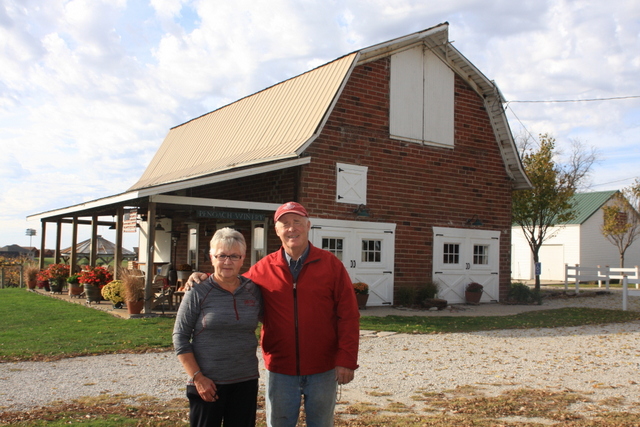
Stan Olson and his wife, Joanie, run Penoach Winery in this historic barn at their acreage north of Adel, Iowa.
In 1960, Olson’s parents, Paul and Mildred Hufferd, purchased the 240-acre farm, where they raised crops, cattle and hogs. Olson moved back to her family’s farm around 1980-81 with her husband, Stan, who had grown up on a farm near Lake Mills. The couple farmed for about 15 years. “My dad raised pigs in the barn, and then Stan did, too,” Olson said.
Although Stan began selling insurance after he quit farming, he never lost his passion for agriculture. “Stan missed growing things, so he planted 50 grape plants in 1999,” Olson said. In 2000, the Olsons started a grape nursery to supply grape vines to wineries that were taking root across Iowa.
Within a few years, the Olsons decided to start their own vineyard and winery. Penoach Winery, which reflects Adel’s original name, opened in 2006. Today, the operation includes 4 acres of grapes behind the barn, not far from areas once covered by cornfields and a hog lot.
“The barn was in pretty good shape when we started remodeling it for the winery,” Olson said. “We worked from top to bottom, starting with cleaning out the hay and pressure washing the barn.”
The transformation also included new floors, electrical wiring, plumbing, windows, doors and a covered patio on the south side of the barn. “Stan did most of the work,” Olson added.
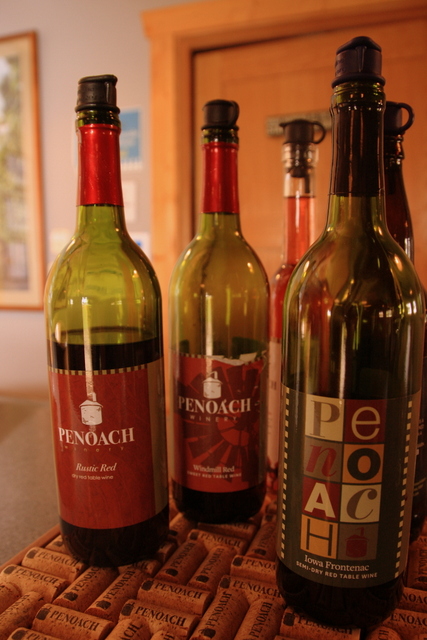
Penoach Winery offers a variety of Iowa wines produced from grapes grown on the Olson’s acreage north of Adel, Iowa.
While couple installed their wine-making equipment in the back of the barn, the space wasn’t quite large enough. About four years ago, the couple moved this equipment to a nearby shed and transformed the back room of the barn into a gathering space, complete with comfortable chairs. In the adjoining room, guests can browse the gift shop, which showcases 18 varieties of wine made at Penoach Winery.
“We enjoy meeting lots of people who visit our winery,” Olson said. “We’re glad we can share our barn with them.”
Want more Iowa culture and history? The barn at Penoach Winery will be featured in my upcoming book, Dallas County, a pictorial history from Arcadia Publishing, which will be released in the summer of 2017. In the meantime, check out my top-selling “Calhoun County” book, which showcases the history of small-town and rural Iowa, as well as my “Culinary History of Iowa” book from The History Press. Order your signed copy today!
P.S. Thanks for joining me. I’m glad you’re here.
@Copyright 2017 Darcy Maulsby & Co.
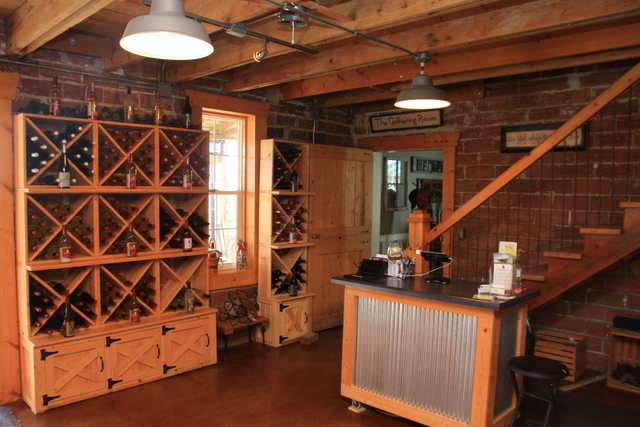
The interior of this former dairy barn is now an inviting, relaxing place to sample Iowa wines.
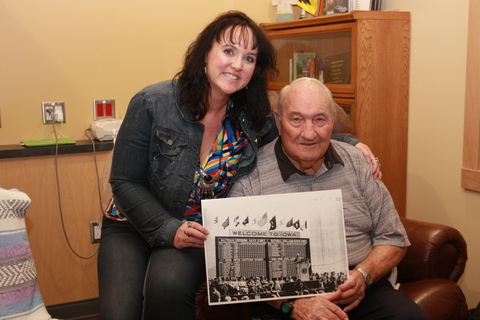
Riding with Harry: 2016 Presidential Election Reflects Truman’s Iowa Revival at 1948 Plowing Match in Dexter
Unpredictable. Shocking. Historic. All have been used to describe the 2016 presidential election, but they also characterized the remarkable presidential election of 1948. Back then, no one thought Harry Truman had any chance of returning to the White House, although he accomplished one of the biggest upsets in U.S. presidential history—and it all started on a farm near Dexter, Iowa.
Bob Larson, an 18-year-old farm boy from Casey, saw it all. “Harry Truman was a farmer, not a politician, at heart,” said Larson, 86, who met Truman on September 18, 1948, at the National Soil Conservation Field Days and Plowing Matches in Dallas County. “We can thank him for the conservation practices that are now common in agriculture.”
A recent high school graduate, Larson was working construction in 1948 with his future father-in-law. The crew was recruited to help build a dam and pond in the conservation demonstration fields north of Dexter. Larson first saw Truman on the afternoon of September 18, when the president jumped off a hayrack at the national plowing matches and headed toward the conservation area. Truman visited with Larson and his friends and family, who were eating lunch under a shade tree.
“Truman said, ‘What the hell are you doin’ just sitting here? Get your dozers started and get back to work. I want to watch you,’” said Larson, who noted that the construction crews had been told to shut down their machines when the president was in the area. “Truman rode with me on my bulldozer for about 10 minutes.”
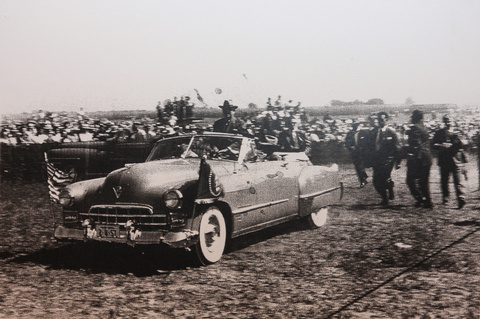
WhenTruman arrived in Dexter on Sept. 18, 1948, he was a 50-to-1 underdog against his presidential rival, New York Governor Thomas Dewey. Nevertheless, a crowd welcomed Truman to Dexter, Iowa, in grand style. As part of his whistle-stop presidential campaign, Truman arrived in Dexter via the Rock Island Railroad, where he was greeted at the depot by the Dexter school band, a parade and a queen and her court. The president, his wife, Bess, and their daughter, Margaret, were escorted to the farm site north of Dexter by a motorcade that included Truman’s convertible limousine.
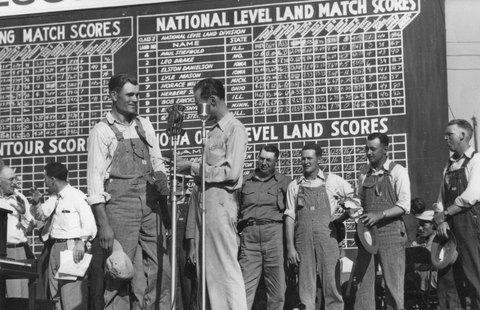
Donald Hanson (left of the radio microphone), a farmer from Roland and competitor at the 1948 National Plowing Matches near Dexter, Iowa, was interviewed on WHO Radio. Hanson is the grandfather of Eric Hanson, a television reporter and anchor on KCCI in Des Moines.
Truman came to Iowa to “Give ‘em Hell”
When Truman arrived in Dexter on Sept. 18, 1948, he was a 50-to-1 underdog against his presidential rival, New York Governor Thomas Dewey. Truman’s appearance in Dallas County stemmed from a White House visit months before when Iowa Farm Bureau President E. Howard Hill and other Iowa ag leaders met with Truman in May 1948 and invited him to come to the National Soil Conservation Field Days and Plowing Matches. The president tried to discourage the men, asserting that they’d have nothing but problems if he and his entourage came.
Dewey was also invited to attend the event but turned the Iowans down flat. “Dewey thought he had the election locked up,” Larson said. “The Midwest didn’t like Dewey, because he was an elitist who had no time for Iowa dirt farmers.”
Months went by with no word from the White House. Then three weeks before the big day, plowing match organizers were notified that Truman had accepted their invitation. Once Dewey heard Truman was headed to Iowa, he immediately arranged for a farm-press event to be held on his Pawling, N.Y., farm on the same day as the national plowing matches near Dexter.
While the media focused on New York, all roads led to the nation’s largest farm event in central Iowa on the September 18, 1948. As the sun rose and the mercury soared, bumper-to-bumper traffic soon clogged the roads near Dexter.
The crowd welcomed Truman in grand style. As part of his whistle-stop presidential campaign, Truman arrived in Dexter via the Rock Island Railroad, where he was greeted at the depot by the Dexter school band, a parade and a queen and her court. The president, his wife, Bess, and their daughter, Margaret, were escorted to the farm site north of Dexter by a motorcade that included Truman’s convertible limousine.
Much to Truman’s delight, a huge crowd of 100,000 people gathered on Lois Agg’s farm to watch the plowing matches, see new conservation practices in action and hear him deliver a speech about farm policy.
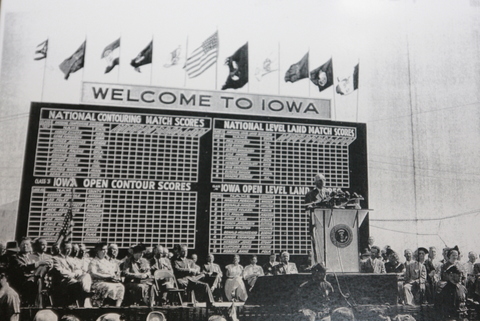
President Harry Truman spoke about farm policy before a crowd of 100,000 people on Sept. 18, 1948, near Dexter, Iowa. This was the first speech that was referred to as “Give ‘Em Hell, Harry,” a slogan that stuck with Truman for the rest of the campaign.
WHO Radio personality Herb Plambeck introduced Truman. During Truman’s 29-minute speech, which was the first major speech of his 1948 presidential campaign, he was interrupted by applause 13 times. The loudest cheers came when he referred to the 80th Congress as the “do nothing Congress.” This was the first speech that was referred to as “Give ‘Em Hell, Harry,” a slogan that stuck with Truman for the rest of the campaign.
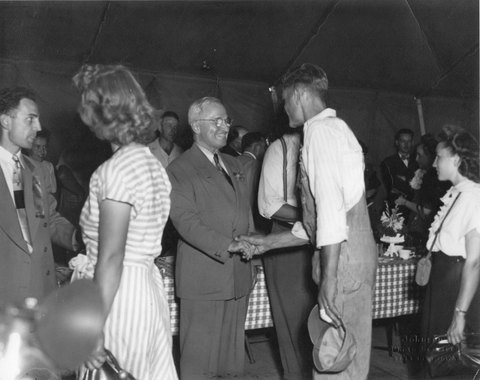
President Harry Truman greeted the crowd at the 1948 National Soil Conservation Field Days and Plowing Matches in Dallas County.
Event ushered in the modern era of ag conservation
After the speech, Truman and his entourage dined on fried chicken before heading out to the demonstration sites to see terraces, ponds and other conservation practices. Truman jumped off the hayrack to get a closer look, as members of the Secret Service scrambled to catch up with him.
“Truman was very interested in soil conservation and asked us a lot of questions,” Larson said. “While some guys thought terraces and contour farming were crazy, many farmers were intrigued by new conservation practices that were being promoted by the Soil Conservation Service.”
Truman took off his suit jacket, rolled up his sleeves on that hot afternoon and continued asking questions as he rode on Larson’s bulldozer while the Secret Service looked on. Larson wasn’t nervous as he chauffeured the president. “Truman was just an old farmer who wanted to know practical things, like how much dirt I was hauling.”
The response Truman received in Dexter that day revitalized his presidential campaign and Truman himself. While the polls still had Truman trailing Dewey on the eve of the 1948 election, and his margin of victory was small, Truman went on to become the 33rd president of the United States.
Truman’s appearance at Dexter also helped usher in the modern era of conservation in agriculture. Larson’s conservation work left a lasting impact, as well, since the dam and pond he built in 1948 are still there. His story, along with photos from that unforgettable day, are preserved at the Dexter Museum and on a historical marker north of Dexter.
“Truman made a good impression on me,” Larson said. “If I’d been old enough to vote in 1948, I probably would have picked Truman.”
Explore more rural Iowa history
Want to discover more stories and pictures that showcase the unique history of small-town and rural Iowa? Check out my top-selling “Calhoun County” book from Arcadia Publishing, and order your signed copy today.
P.S. Thanks for joining me. I’m glad you’re here.
@Copyright 2016 Darcy Maulsby & Co.
Iowa Eats! Why Radio Iowa, Newspapers and Libraries are Hungry for “A Culinary History of Iowa”
Everyone has an Iowa food story, even those doubters who sounded incredulous when I first proposed my idea for my “Culinary History of Iowa” book. Their amusement, followed by the inevitable question, “Iowa has a culinary history?” quickly dissolved into stories of Maid-Rites, potlucks and more.
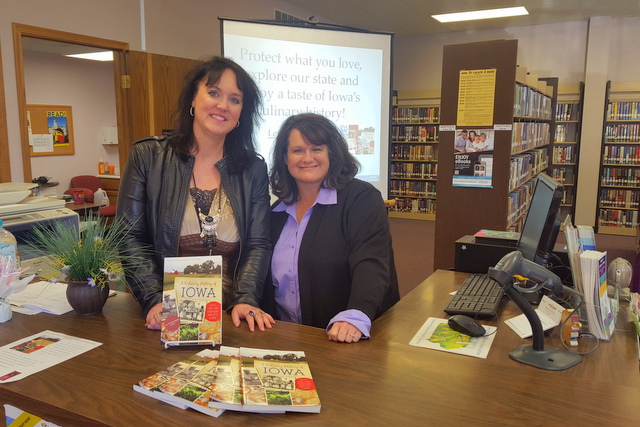
The media, Iowa libraries and others across the state have really embraced these stories, too. I was honored to offer book programs and signings at the Ruthven Public Library and beautiful Kendall Young Public Library in Webster City. I was also pleased that the Webster City Freeman Journal ran a feature story on my book, at Pat Powers from KQWC Radio in Webster City interviewed me in a broadcast that has now popped up on Radio Iowa.
Need a fun read or a great gift idea? Click here to visit my online store, where you can purchase copies of “A Culinary History of Iowa,” a unique set of 15 vintage images from “A Culinary History of Iowa,” and my first book, “Calhoun County,” which shares the remarkable, illustrated history of small-town and rural Iowa through the eyes of those who lived it.

November 19th, 2016 by Ric Hanson
http://www.kjan.com/index.php?cat=3&paged=2
From pork tenderloins to sweet corn to Jell-o, a new book is out focused on Iowa foods and the flavors that make the state so delicious. The book, “A Culinary History of Iowa,” traces the popular tastes of Iowans through the years, according to author Darcy Dougherty Maulsby, of Lake City. “We do have great cuisine,” Maulsby says. “It’s funny. When the book came out, I had some people questioning, ‘Iowa has a culinary history?’ We sure do. I said, ‘Just starting thinking what defines Iowa food,’ and everybody always comes up with an answer.” Maulsby says she’s done research for the book by exploring all four corners of the state and everything in between.
“I’ve been working on it in bits and pieces for almost 20 years in my career as an ag journalist,” Maulsby says. “I’ve traveled the state and met with some of Iowa’s finest chefs and lots of great old-school farm cooks. I’ve seen the spectrum of really awesome Iowa food and it’s been so much fun to collect all of these stories and photos in one place.” Some might categorize it as a cook book but Maulsby says it’s more than that.
“It’s the story behind the things that define Iowa food,” Maulsby says. “Whether that’s Maid-Rites, Dutch letters from Pella, there’s so many fun stories, Laura Ingalls Wilder turns up in there, the Younkers Tea Room, all of these amazing traditions, meat lockers, sweet corn, all of the things that make Iowa food great.” Find the book at the Amazon and Barnes & Noble websites as well as at: www.darcymaulsby.com. (Radio Iowa)
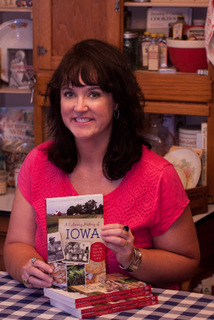
Darcy Maulsby is the author of “A Culinary History of Iowa,” which serves up stories, photos, recipes and more!
Iowa Eats: Maulsby pens book on the state’s culinary history
NOV 16, 2016
by ADRI SIETSTRA, Webster City Freeman Journal reporter
asietstra@freemanjournal.net
Author Darcy Maulsby will be bringing Iowa food stories to life during a free program Thursday evening at 6:30 p.m. at Kendall Young Library. The program will feature a cooking demonstration with book signing to follow.
“You’ll love this fun, fast-paced program filled with stories, rare vintage photos and surprising recipe tips. Be prepared to dig into the remarkable stories behind Iowa classics like Maid-Rites, breaded pork tenderloins, Iowans’ obsession with Jell-O, and our distinctive chili-and-cinnamon roll phenomenon,”said Maulsby. “I’ll also share practical, proven tips on how to preserve your own family’s history and food traditions.”
Maulsby, 43, is a self-described foodie and home cooking enthusiast from Lake City. She began baking and cooking in grade school while growing up on the farm. She entered many cooking contests at the Calhoun County Expo while a member of the Lake Creek Go-Getters 4-H Club.
“Food writing is a large part of my work as a small-business owner, freelance writer and marketing specialist who focuses on agriculture. I work with clients ranging from the National Pork Board to Farm News, where I often interview chefs and home cooks, create recipe pages and write feature stories that highlight the farm-to-fork connection,” said Maulsby.
In 2007, Maulsby completed the Master Food Preserver course through University of Illinois Extension. She earned her bachelor’s degree in journalism/mass communications and history from Iowa State University (ISU) and also earned her master’s degree in business administration from ISU.
Maulsby’s jams have won blue ribbons at the Iowa State Fair, and cookies have earned top honors at the Clay County Fair. She is also a certified Kansas City Barbecue Society judge.
Maulsby credits a variety of sources for the inspiration for her new book.
“The stories in “A Culinary History of Iowa” have come from the Iowa State Fair, as well as long-time restaurant owners, experienced farm cooks, candy shop owners and other foodies throughout Iowa,”Maulsby said.
Maulsby is excited to share some of Iowa’s culinary history with attendees Thursday evening.
“Everyone has a food story. Sometimes we don’t realize just how unique-and tantalizing-Iowa’s food traditions are. If you like to travel, you’ll walk away from this program inspired to explore Iowa, where you can sample flavors from around the globe without leaving the state,” said Maulsby. “If you have an appetite for adventure, you can’t do better than Iowa when it comes to history, agriculture and one-of-kind culinary experiences.”
Signed copies of her book “A Culinary History of Iowa” will be available for $24 a copy.
Celebrating great Iowa eats
LINDSAY ANDERSON, Kendall Young Librarian
 We Midwesterners are known far and wide for our excellent, down-home cuisine. Having only lived in Iowa for two years, I have already eaten enough to be amazed at Iowa’s particular brand of culinary delights.
Have you ever wondered why Iowans cook – and eat – so well, and from where your signature recipes and food traditions originate? Iowa author and Lake City native, Darcy Maulsby, explores these and other food stories in her recently published book, Culinary History of Iowa. In it, she discusses everything from Maid-Rite classics to Iowan’s homemade cinnamon rolls (served with chili, of course). The Library is delighted to be hosting Maulsby at Kendall Young Library on Thursday, November 17 at 6:30pm for a presentation, book signing and cooking demonstration. Maulsby has been featured in the Iowa History Journal, Our Iowa magazine, Iowa Public Radio, and more. During Maulsby’s fun, interactive program, she will serve up fascinating tidbits related to more than 150 years of Iowa cuisine from all corners of the state. Attend this free event and discover how Iowa’s delectable cuisine is quintessentially Midwestern, grounded in its rich farming heritage and spiced with diverse ethnic influences.
On the Shelf
If all this talk of food has left you hungry, here are some titles that can help get some great, local Iowa eats cooking in your kitchen: The following cookbooks were recently added to the Library’s Genealogy Reference collection. While we do not allow these unique cookbooks to be checked out, you are welcome to browse them and make copies of any recipes that catch your eye.
The Famous Old Webster City Cook Book
Curated by The Ladies’ Aid Society of the Congregational Church in 1916, this cookbook boasts only “tried and tested” local recipes, including everything from waffles and pancakes, to salads and corn breads. A fun addition: the past page of this cookbook includes “Discoveries and Household Hints,” a delightful list of tips and tricks from some early 1900s kitchen experts.
4-H & Friends Cookbook
Assembled in honor of the Hamilton County 4-H program’s 70th anniversary in 1987, this nearly 400-page volume is painstakingly indexed, and boasts over 13 sections of recipes. Explore and discover some delightful gems; experiment with recipe choices ranging from “Shoo-Fly Cake” to “Gramma’s Hamburger Soup”.
St. Paul’s Lutheran Church Anniversary Cookbook
Compiled by the ALCW of St. Paul’s Lutheran Church of Williams, Iowa in 1987 to commemorate their 75th anniversary, this volume boasts more than 250 pages of hardy, time-tested eats that will satisfy your hunger and delight your taste buds. Try your hand at everything from “Buttermilk Cinnamon Bars,” to “Zucchini Date Pecan Loaf,” to “Highbrow Haddock.”
Try out these locally celebrated recipes for some delicious mealtime fun, and don’t forget to join us at the Library with Darcy Maulsby on Thursday, November 17 at 6:30pm for an unforgettable (not to mention delicious) journey into Iowa’s culinary past.
Order you copies today!
Click here to visit my online store, where you can purchase copies of “A Culinary History of Iowa,” a unique set of 15 vintage images from “A Culinary History of Iowa,” and my first book, “Calhoun County,” which shares the remarkable, illustrated history of small-town and rural Iowa through the eyes of those who lived it.
Talking “Stilettos in the Cornfield,” Taxes, Trade and More on CNBC
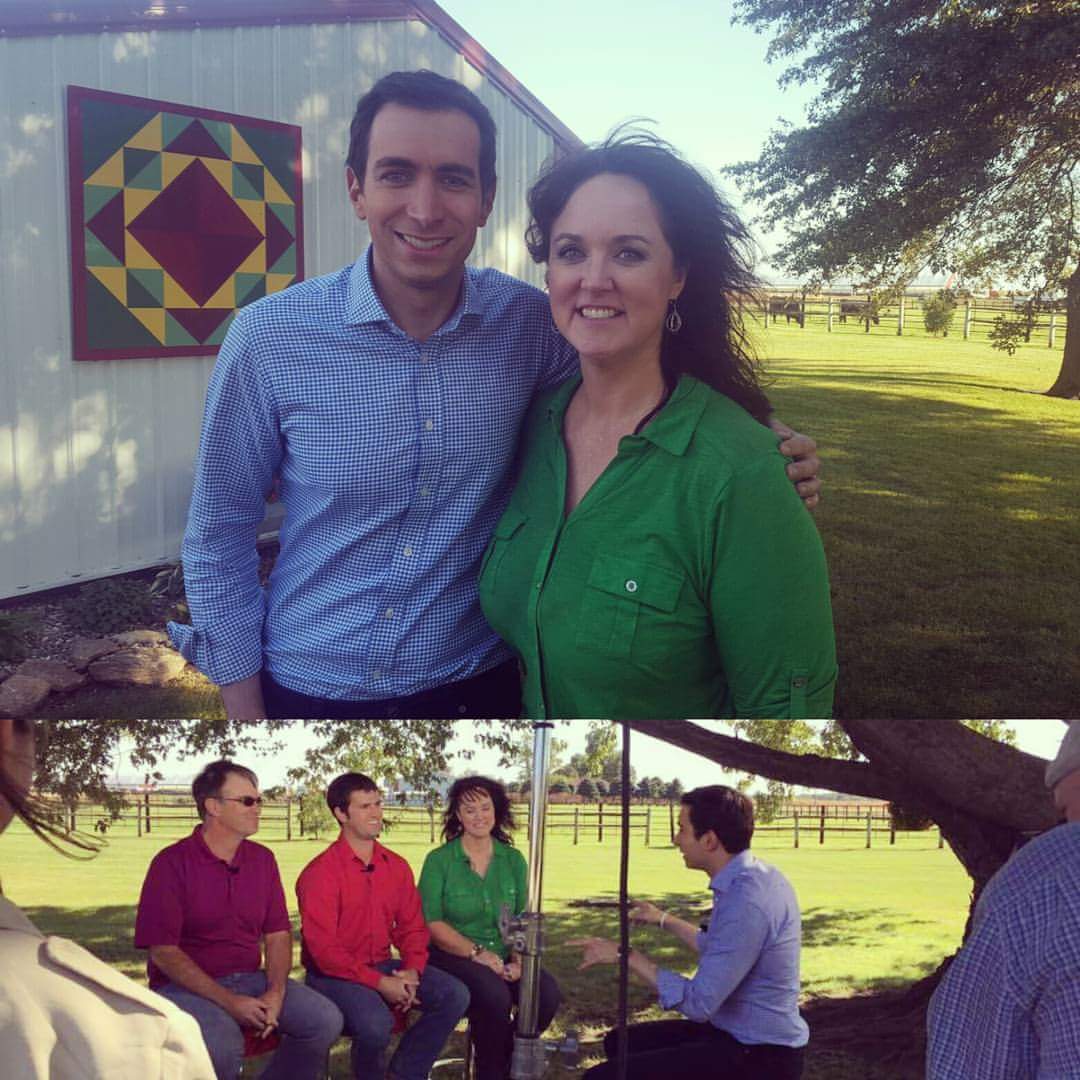
What’s on Iowa farmers’ minds regarding the 2016 presidential election? See how “stilettos in the cornfield” became a hook when Andrew Ross Sorkin interviewed me on CNBC’s “Squawk Box” to discuss key issues here in rural Iowa from a farmer’s point of view.
Check out the video here. It all went down on a beautiful fall afternoon on a farm near Linden, Iowa. Proud of Iowa farmers who give a voice to rural America!
Explore more rural Iowa history
Want to discover more stories and pictures that showcase small-town and rural Iowa’s culture and history? Perhaps you’d like a taste of Iowa’s culture and favorite recipes. Check out my top-selling “Culinary History of Iowa” book from The History Press and “Calhoun County” book from Arcadia Publishing, and order your signed copies today.
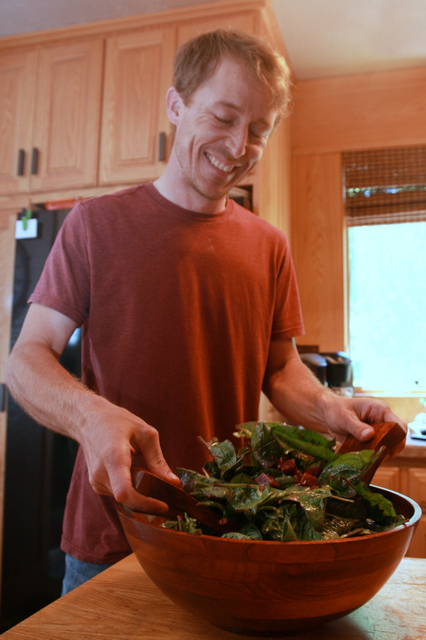
Very Veggie: Iowan’s Farm-Fresh Recipes Offer Guilt-Free Eating
For a guy who didn’t care for vegetables as a kid, Adam Nockels has come a long ways. Now he runs Iowa’s Raccoon Ridge Farm, which specializes in an array of naturally-grown produce.
“My foodie friends in college, including one who is a gardener, got me interested in fresh foods and new flavors,” said Nockels, who was born in Lake City but grew up on military bases before returning to the Lake City area.
Food production also appealed to Nockels, a U.S. Air Force veteran who used the G.I. Bill to attend Iowa State University, where he earned his biology degree in 2010. After completing an internship at Turtle Farm near Granger, where he learned about vegetable production and community supported agriculture (CSA), Nockels knew he wanted to work in production agriculture. When he proposed the idea of starting a farm on the land his family owns between Lake City and Auburn, his grandparents Dennis and Sheila Moulds liked the idea.
“My Grandma Sheila and my mom, Debby, have green thumbs,” said Nockels, who has 10 acres in Raccoon Ridge Farm, which includes 2.5 to 3 acres of vegetables grown with organic practices. “I also like working outdoors and growing healthy food for people.”
Nockels grows a wide variety of crops, including green beans, spinach, lettuce, radishes, strawberries, kale, herbs, squash, peas, potatoes, beets, heirloom tomatoes and more, which he sells at the Lake City Farmers Market and through his weekly CSA deliveries in Lake City, Rockwell City and Carroll. Nockels’ favorite heirloom tomato is the Cherokee Purple Tomato, a flavorful variety that was reportedly gifted to a farmer in Tennessee in the 1890s from Cherokee natives. “Nothing is better than an heirloom tomato,” Nockels said. “For me, it’s either slice, salt and go, or use the tomato in a BLT sandwich.”
Nockels’ weekly newsletters for CSA customers include a list of produce supplied that week, brief descriptions of the unique items in the box, tips for storing the produce, recipes and seasonal cooking tips such as how to roast chile peppers. Some of Nockels most popular items are his green beans. In 2015, the sandy, loamy soils of Raccoon Ridge Farm produced almost 450 pounds of green beans, so full-share holders received roughly 23 pounds of green beans each.
Nockels enjoys experimenting with new recipes, as well as relying on tried-and-true family recipes, to showcase the bounty of the harvest. “When good food is prepared properly, it tastes better. This is guilt-free eating.”
Savor more of Iowa and its food stories, history and more
Want more fun Iowa food stories and recipes? Sign up today for my blog updates and free e-newsletter, or click on the “Subscribe to newsletter” button at the top of my blog homepage.
You can also order my “Calhoun County” Iowa history book, postcards made from my favorite photos of rural Iowa and more at my online store. Thanks for visiting!
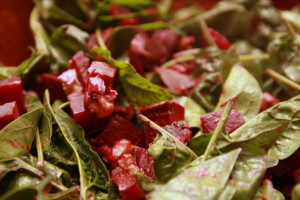
Roasted Beet Salad with Goat Cheese
1 / 4 cup balsamic vinegar
3 tablespoons shallots, thinly sliced
1 tablespoon honey
1/ 3 cup extra-virgin olive oil
Salt and freshly ground black pepper
6 medium beets, cooked and quartered
6 cups fresh greens (spinach, lettuce, arugula, etc.)
1 / 2 cup walnuts, toasted, coarsely chopped
3 ounces soft fresh goat cheese, coarsely crumbled
Line a baking sheet with tinfoil. Preheat oven to 450 degrees
Whisk the vinegar, shallots and honey in a medium bowl to blend. Gradually whisk in the olive oil. Season the vinaigrette to taste with salt and pepper. Toss the beets in a small bowl with enough dressing to coat. Place the beets on the prepared baking sheet, and roast until the beets are slightly caramelized, stirring occasionally, about 12 minutes. Set aside and cool.
Toss the greens and walnuts in a large bowl with enough vinaigrette to coat. Season the salad to taste with salt and pepper. Mound the salad atop four plates. Arrange beets around the salad. Sprinkle with goat cheese. Serve.
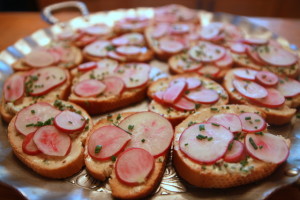
Radish Toast with Sesame-Ginger Butter
4 tablespoons butter, room temperature
3 tablespoons minced chives, divided
1 tablespoon toasted sesame seeds
3 / 4 teaspoon grated peeled fresh ginger
1 / 4 teaspoon Asian sesame oil
16 1 / 4-inch-thick baguette slices, lightly toasted
10 radishes, thinly sliced
Mix butter, 2 tablespoons chives, sesame seeds, ginger and sesame oil in small bowl; season with salt and pepper. Spread butter mixture over each bread slice. Top with radishes, overlapping slightly. Sprinkle with remaining chives.
Spinach Quiche
1 tablespoon butter
2 spring onions, minced
2 bunches spinach, thick stems removed and leaves roughly chopped
Coarse salt and ground pepper
4 ounces Gruyere or Swiss cheese, grated (about 1 cup)
1 frozen pie crust
4 large eggs
1 1 / 2 cups half-and-half
Dash of ground nutmeg
1 teaspoon salt
1 teaspoon pepper
Preheat oven to 350 degrees, with racks set in upper and lower thirds. In a large skillet, heat butter over medium. Add spring onions, and cook, stirring occasionally, until softened, 1 to 2 minutes. Add as much spinach to skillet as will fit; season with salt and pepper, and toss, adding more spinach as room becomes available, until wilted, 2 to 3 minutes.
Transfer spinach mixture to a colander. Press firmly with the back of a spoon to squeeze out as much liquid as possible. Sprinkle cheese onto crust. Spread spinach mixture over shredded cheese.
In a large bowl, whisk together eggs, half-and-half, nutmeg, 1 teaspoon salt and 1 teaspoon pepper. Pour egg mixture into crust.
Bake until center of quiche is just set, 55 to 60 minutes. Let quiche stand 15 minutes before serving.
Cover and refrigerate leftovers up to 1 day. Reheat at 350 degrees until warm in the center, 30 to 40 minutes.
Easy Kale Chips
Preheat oven to 350 degrees. Remove large central stem from kale leaves and tear into chip sized pieces. Drizzle with olive oil and add a sprinkle of salt or seasoned salt. Bake in the oven for 10-15 minutes until leaves edges are brown but not burnt.
Peas and New Potatoes
1 pound new potatoes
1 cup shelled peas
1 tablespoon butter
1 tablespoon flour
Salt and pepper to taste
1 cup milk or half & half
Bring a large pot of water to a boil over high heat. Boil potatoes for 15 to 20 minutes, until tender. Drain.
In a medium saucepan, bring 1 cup water to a boil. Simmer peas in boiling water for 6 to 7 minutes, or until tender (do not overcook). Drain.
Using the same saucepan, melt butter over medium heat. Stir in flour to make a thick paste; gradually whisk in milk, stirring constantly until slightly thickened. Season with salt and pepper to taste. Add potatoes and peas to the sauce; simmer for about 5 minutes, stirring often. Serve immediately.
Crisp Tuna-Cabbage Salad
One 5-ounce can tuna, drained
2 cups finely chopped green or red cabbage, from about 4 ounces or 1 / 4 of a small head of cabbage
1 tablespoon mayonnaise
3 tablespoons plain Greek yogurt
Salt and freshly ground black pepper
Shred the tuna with a fork and mix thoroughly with the cabbage. Stir in mayonnaise and yogurt. Add salt and pepper to taste. Eat immediately, or refrigerate for up to two days. Makes two 1-cup servings.
Basil Pesto
1-2 cups fresh basil leaves
2-4 cloves of garlic
3 / 4 cup good olive oil
1 / 2 cup grated Parmesan cheese
1 / 4 cup pine nuts or walnuts (opt.)
Put basil in blender or food processor. Add garlic, and blend, adding olive oil slowly. Add Parmesan and pine nuts. Blend all into a thick sauce.
This is good over any hot pastas. It can be also added to salad dressing, 1 tablespoon at a time, used as a spread for tomatoes, on crackers, etc. Pesto can also be frozen in small container for use later.
Green Bean and Pasta Salad
4 ounces penne pasta, uncooked (1 1/4 cups)
4 ounces green beans, halved crosswise (about 1 cup)
1 cup canned red or kidney beans, rinsed
1/4 cup chopped fresh flat-leaf parsley
2 tablespoons grated Parmesan (2 ounces)
2 tablespoons olive oil
2 tablespoons fresh lemon juice
Kosher salt and black pepper
Cook the pasta according to the package directions, adding the green beans during the last 3 minutes of cooking. Drain and run under cold water to cool.
Toss the cooled pasta and green beans with the red beans, parsley, Parmesan cheese, olive oil, lemon juice, 1 / 2 teaspoon kosher salt, and 1 / 4 teaspoon black pepper. Divide the salad between two containers and refrigerate for up to one day.